Licensed, Bonded & Insured | Family Owned & Operated
049-028103 IL | IL Pumping License: 054-021753 | IA Pumping License: 12839
25 YRS. EXPERIENCE, FULL SITE PREP EXPERTS - HOW CAN WE HELP?
We Serve: Rock Island, Henry, Knox, or Mercer Counties in Illinois, and Scott County in Iowa
Best Drainage Systems Near Henry County, IL | Local Homeowner’s Guide
Why Drainage Problems Are So Common near Henry County, Illinois
You step outside after a hard rain and see it again.
Water sitting in the yard.
Mud where your kids usually play.
A puddle that seems to be getting closer to the foundation.
If you live near Henry County or anywhere around Orion, Geneseo, Cambridge, or Kewanee, you know this isn’t rare. It feels like every time it rains hard, your yard turns into a sponge that never dries out.
And if we’re being honest, it’s stressful.
You start wondering:
Is this damaging my foundation?
Why is my basement starting to smell musty?
Is this going to cost me a fortune?
Did the builder grade this wrong?
You are not overreacting. Water around your home is not something to ignore.
Here in western Illinois, we deal with heavy rains, snowmelt, and clay-heavy soil that doesn’t drain well. That combination creates real problems for homeowners near Henry, Rock Island, Knox, Mercer, and even over into Muscatine County.
At Triple D Excavating Co., we’ve seen just about every type of drainage issue you can imagine. And what we’ve learned is this: there is no one-size-fits-all fix. The best drainage solution depends on your land, your soil, and how water moves across your property.
Before you can choose the best company, you need to understand what’s actually happening.
The Warning Signs You Need Professional Drainage Systems Near Henry County, IL
Some drainage problems are obvious. Others sneak up on you.
Here are signs we commonly see around Henry County homes:
Standing water that stays for more than 24 to 48 hours
Water pooling near the foundation
Erosion around sidewalks or driveways
Soggy spots in the yard that never seem to dry
Basement dampness or musty smells
Cracks forming in foundation walls
Downspouts that dump water right next to the house
A lot of homeowners try to live with these problems. You might think, “It’s just been a wet season.” Or, “It’s probably normal.”
But water always follows gravity. And if it’s not directed away from your house properly, it will find the lowest point. Too often, that lowest point is your foundation.
What Causes Yard Flooding and Foundation Water Issues near Henry County Homes?
In our area, the biggest culprit is soil.
Henry County has a lot of clay-based soil. Clay does not drain quickly. Instead of soaking in like sand, water sits on top or moves slowly through it.
Other common causes include:
Improper grading during construction
Settling soil around the foundation
Clogged or undersized drain tile
Short downspout extensions
Neighboring properties draining toward yours
Landscaping that traps water
We’ve seen homes in Orion and across Rock Island County where just a slight slope toward the house caused years of headaches.
The frustrating part? Sometimes the issue isn’t visible until after heavy rain. That’s why a proper evaluation matters.
How Poor Drainage Can Damage Your Home’s Foundation, Basement, and Landscaping
Water is powerful. Over time, it will move soil, create pressure, and weaken structures.
Here’s what poor drainage can lead to:
Foundation Damage
When water builds up against your foundation walls, it creates hydrostatic pressure. That pressure can cause cracks, bowing walls, and leaks.
Basement Moisture
Even if you don’t have standing water inside, damp air can lead to mold growth and wood rot.
Erosion
Water can wash away soil around patios, sidewalks, and driveways. That leads to uneven surfaces and potential trip hazards.
Landscaping Loss
Mulch beds wash out. Grass dies. Decorative stone shifts.
The longer water problems are left alone, the more expensive they tend to become.
The Most Effective Homes for Drainage Systems near Henry County, IL
There isn’t one “best” system for every yard. The best solution depends on your property.
Here are common drainage options we install throughout Henry and surrounding counties.
French Drain Systems
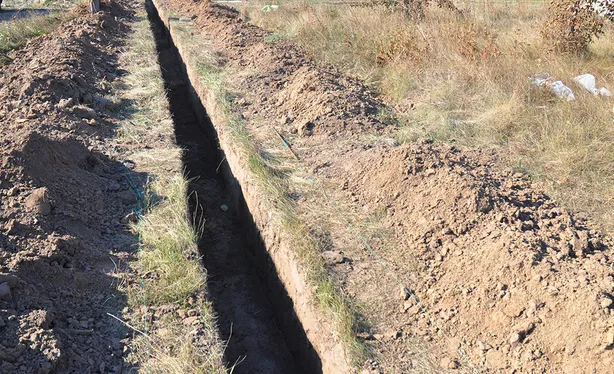
A French drain is a trench filled with gravel and a perforated pipe that redirects water away from problem areas.
Best for:
Water collecting near foundations
Persistent soggy spots
Subsurface drainage issues
Surface Drain Systems
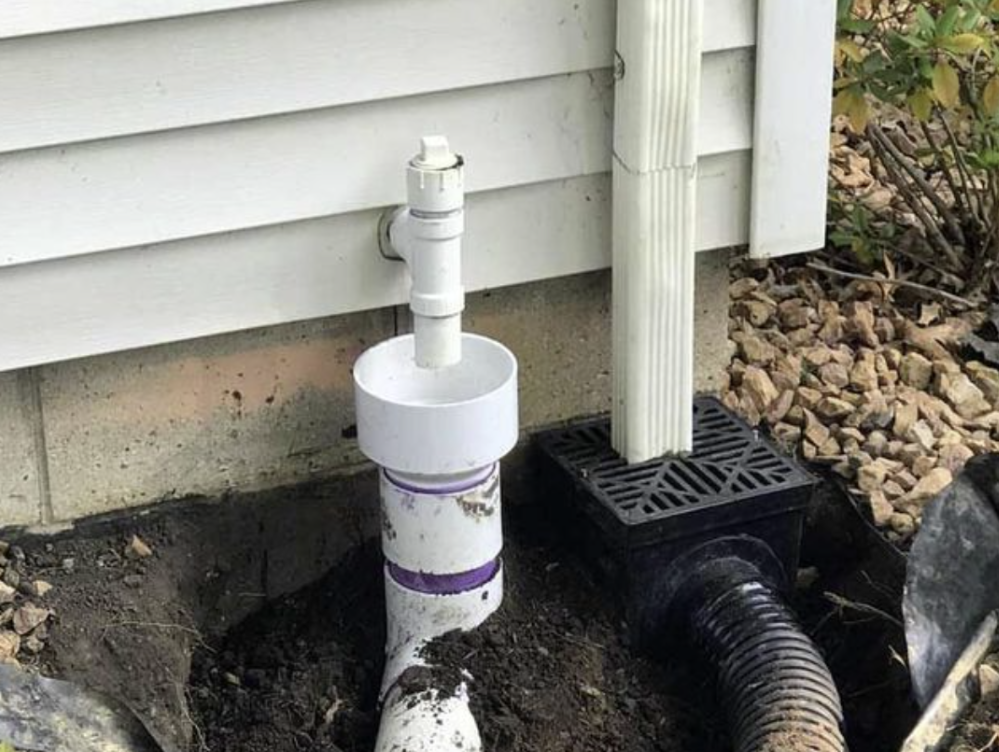
Surface drains collect water at ground level and move it away quickly.
Best for:
Heavy runoff from roofs
Driveway water pooling
Sloped yards
Yard Regrading
Sometimes the simplest solution is reshaping the land so water naturally flows away from the home.
Best for:
Improper slope toward foundation
New construction correction
Large water flow problems
Downspout Extensions and Drain Tile Repairs
Small adjustments can make a big difference.
Best for:
Concentrated roof runoff
Minor pooling near corners
Older drain systems needing repair
French Drains vs. Surface Drains: Which Drainage System Is Right for Your Property?
Homeowners often ask which system is better.
The answer depends on where the water is coming from.
If water is moving across the surface quickly, surface drains work well.
If water is saturating the soil and building up underground, a French drain may be more effective.
In many cases across Henry and Knox Counties, we combine both.
That’s where experience matters. Installing the wrong system wastes money and doesn’t solve the root issue.
Yard Regrading vs. Installing a Drainage System: What Works Best in Illinois Clay Soil?
Clay soil holds water longer than sandy soil.
Sometimes regrading alone is enough. Other times, re-grading without drainage pipe underneath simply moves the problem elsewhere.
We’ve corrected properties where a builder tried to fix drainage with extra topsoil. That works temporarily. But if the base soil doesn’t drain, the problem returns.
The right approach often involves reshaping the yard and giving water a path to travel safely away.
How to Choose the Best Drainage Contractor Near Henry County, IL
When searching for the best drainage systems near Henry County, look for a contractor who:
Evaluates your entire property, not just one spot
Understands local soil conditions
Explains why they recommend a specific system
Has experience with grading and excavation
Does not push the same solution every time
The best drainage contractor should talk more about your property than their equipment.
What to Look for in Reviews of Drainage Companies near Rock Island, Henry, Knox, Mercer, and Muscatine Counties
Reviews matter, but you need to read them carefully.
Look for comments about:
Problem-solving ability
Communication
Long-term results
Clean job sites
Honest recommendations
If every review sounds generic, that’s a red flag.
If homeowners mention that their issue was unique and handled carefully, that tells you something important.
Why Customized Drainage Systems Matter for Homes near Western Illinois
No two yards are identical.
Even two homes on the same street in Orion can have different drainage needs based on slope, soil compaction, landscaping, and elevation.
At Triple D Excavating Co., we don’t walk onto a property assuming we know the answer before we look around.
We take time to study how water is moving. We look at high points and low points. We consider how changes today will affect the property years from now.
That’s how long-term systems are built.
Questions to Ask Before Hiring a Drainage Solution Near Orion, IL
Before signing a contract, ask:
What is causing the water problem?
Why is this system the right solution?
Will this fix the issue long term?
What happens if we get heavier rain than normal?
How will this impact landscaping or sidewalks?
A good contractor should answer clearly and confidently.
What Makes a Drainage Solution “The Best” for Your Specific Property?
The best drainage solution:
Solves the root cause, not just the symptom
Directs water away from structures
Matches your soil type
Holds up over time
Fits your property layout
The “best” solution isn’t about price alone. It’s about durability, design, and correct installation.
How Triple D Excavating Co. Approaches Drainage Systems near Henry County, IL
We’re based in Orion, Illinois, and we serve homeowners across Rock Island, Henry, Knox, Mercer, and Muscatine Counties.
Our approach is simple:
Evaluate the entire property.
Identify how and why water is collecting.
Design a system that fits the land.
Install it correctly the first time.
We are serious about customizing every drainage solution. That’s not marketing language. It’s how drainage actually works.
Water doesn’t care about shortcuts. Neither do we.
Final Thoughts: Finding the Best Drainage Systems Near Henry County, IL
If you’re reading this, chances are you’re tired of dealing with water problems.
You might feel frustrated. Maybe even a little overwhelmed.
That’s understandable.
Drainage issues are not just inconvenient. They feel like a threat to your home, your investment, and your peace of mind.
The good news is this: drainage problems can be fixed.
The key is choosing a contractor who understands Henry County soil, local weather patterns, and proper excavation techniques.
The best drainage solution is the one designed specifically for your property, installed correctly, and built to last.
And when water finally flows away from your home the way it should, you will feel the difference immediately.
Dry yard.
Stable foundation.
Peace of mind.


AVOID COSTLY MISTAKES:
Do NOT hire an excavating contractor without first reading our free guide:
The ULTIMATE Excavation & Septic "Success Guide."

We Offer Septic & Excavation Services Near You!
If you don't see your specific area, contact us and we may still be able to help or give a referral.
Address: 3359 N 1300th Ave, Orion, IL 61273
Hours:
Mon - Fri. 7:00 am - 5:00 pm (Closed Sat & Sun.)
Extended hours by appointment only.


All rights reserved | Privacy policy