
Licensed, Bonded & Insured | Family Owned & Operated
049-028103 IL | IL Pumping License: 054-021753 | IA Pumping License: 12839
25 YRS. EXPERIENCE, FULL SITE PREP EXPERTS - HOW CAN WE HELP?
We Serve: Rock Island, Henry, Knox, or Mercer Counties in Illinois, and Scott County in Iowa
Fall Field Tile and Farm Drainage Repairs Before Freeze-Up in Henry County
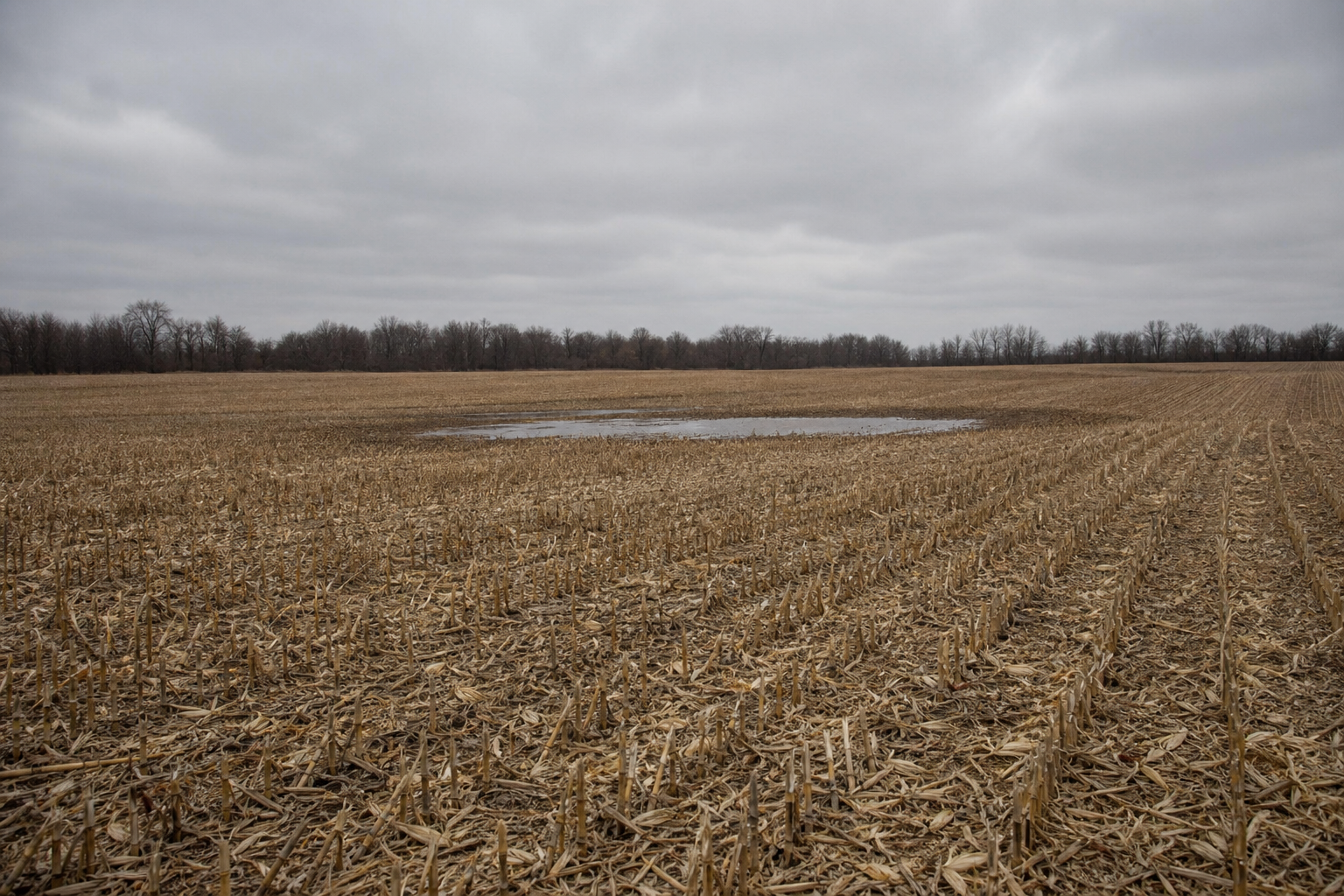
Once the combines are out of the field, a narrow and valuable window opens across Henry, Rock Island, Knox and Mercer counties and over into Scott County, Iowa. The ground is firm, the crop is off, and there is still time to get a tile repair done before the frost shuts everything down.
For farmers and rural landowners, that window is worth using. A blown tile or a plugged outlet does not fix itself over the winter, and the consequence shows up as a wet hole you cannot plant into next spring.
Why post-harvest is the right time
Access. No standing crop means machines can reach the work without destroying anything.
Firm ground. Fall soil conditions are generally drier than spring, which means less rutting and cleaner work.
You just saw the evidence. Harvest is when problems announce themselves — the spot where the combine nearly got stuck, the area that yielded poorly, the persistent wet hole. That information is fresh right now, and it is exactly what a tile repair should be aimed at.
Time before spring. A repair completed in the fall is working during snowmelt and spring rain, when you actually need it. The same repair postponed means another full season of the same problem.
Signs a tile line is failing
Drain tile is buried and out of sight, so diagnosis is mostly about reading the surface:
- Persistent wet spots in a field that stay wet when the ground around them has dried
- Yield differences that show up in the same location year after year
- A surface depression or blowhole — a sinkhole over a tile line usually means the tile has collapsed and soil is washing into it
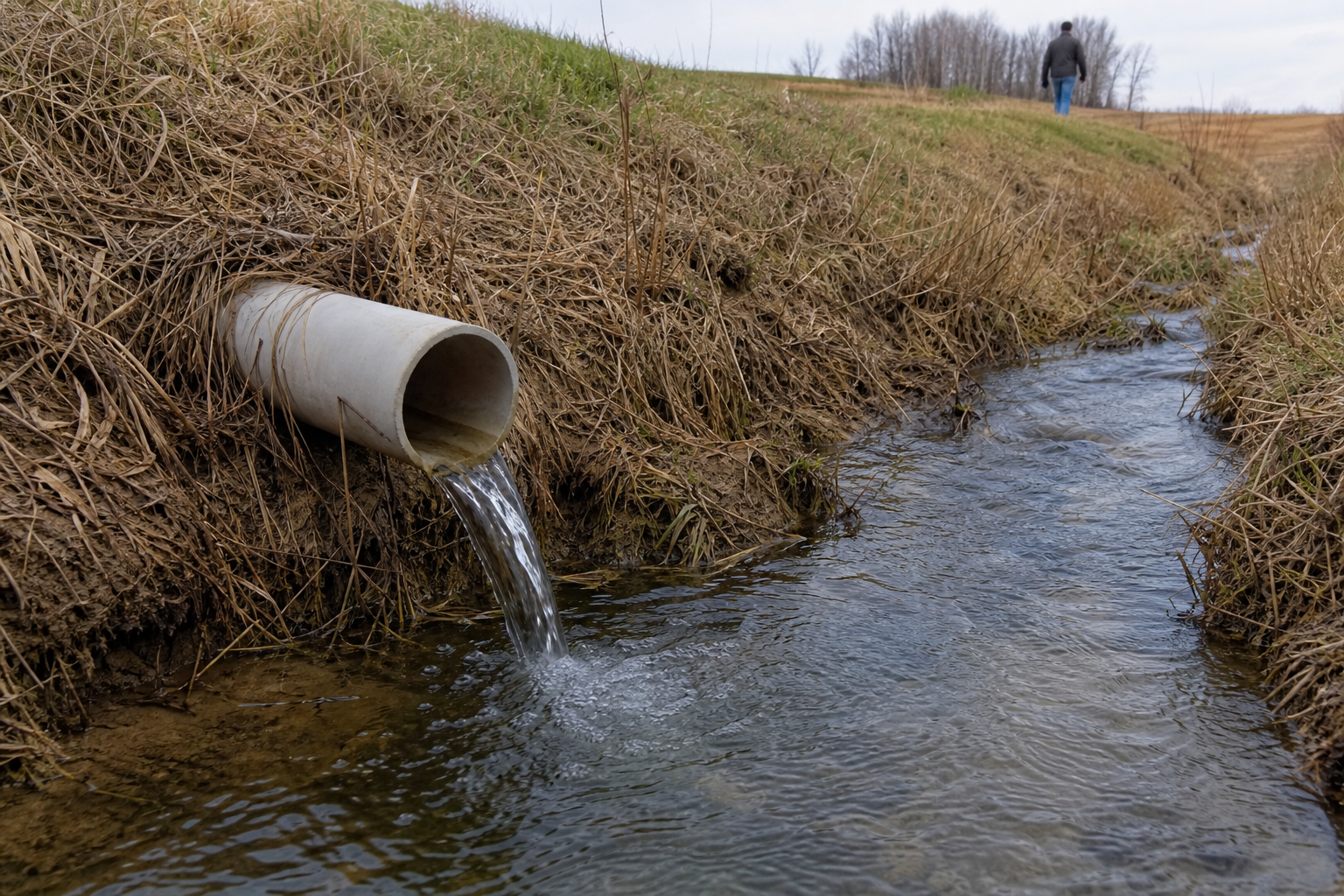
- An outlet that is not running when it should be, or running much less than it used to
- A crushed, silted or damaged outlet at the ditch
- Water surfacing along the line rather than being carried away
- Delayed field access in spring — areas that are always the last to be workable
The outlet is worth checking first, because it is easy to inspect and it is a common failure point. A tile system is only as good as its discharge: if the outlet is crushed, submerged, plugged with sediment, or blocked by a rodent nest or vegetation, the whole line upstream backs up. Some outlets fail simply because the ditch bank has slumped over them.
Old tile has a limited life
A great deal of the tile in western Illinois and eastern Iowa is old — clay tile installed generations ago, laid in short sections with open joints. It worked, and much of it still does, but it has failure modes worth understanding:
Joints separate over decades of soil movement and freeze-thaw cycling, allowing soil in and causing blockages or surface depressions.
Sections collapse under modern equipment weight. Machinery today is considerably heavier than what these lines were installed under.
Roots invade. Tile running near a fence line, timber edge or tree row will eventually be found by roots.
Sediment accumulates, gradually reducing capacity until the line barely functions.
Capacity is outgrown. Old systems were often designed for a lower drainage coefficient than modern farming expects. A line can be intact and still be inadequate.
Repairing a short section of failed old tile is often the right call. But if you are repairing the same system every year, that pattern is telling you something about replacement or supplementing with new lines.
Repair, replace, or add
Spot repair makes sense when the system is generally sound and one identifiable section has failed — a collapse, a blowhole, a damaged outlet.
Replacing a run makes sense when a line has multiple failures, or when old clay tile has deteriorated to the point that fixing one section just moves the problem.
Adding pattern tile or laterals makes sense when the existing system is intact but simply does not drain an area adequately.
Whichever it is, the surface water side deserves attention at the same time. Surface inlets, grassed waterways, terraces and the condition of the ditch all interact with what the tile can do. A tile line discharging into a ditch that has silted in is not going to perform, no matter how good the tile is.
Know where things are before you dig
Two practical cautions:
Call for utility locates. Illinois and Iowa both operate 811 one-call systems, and notification before digging is a legal requirement. Rural ground has plenty of buried infrastructure — gas, fiber, electric, water — and hitting any of it is expensive and dangerous.
Mind the septic separation. If you are working near a home's onsite sewage system, Illinois' Private Sewage Disposal Code specifies minimum separation distances between septic components and features including field drain tile. Local health departments administer these requirements, and it is worth checking before you install a new line near a house.
Do not put it off
Fall tile work is limited by the same thing everything else is: the freeze. Once the ground is frozen, trenching becomes difficult, and backfill made of frozen clumps does not compact — which means settling over the trench line come spring.
There is usually a good stretch of workable weather after harvest. The farms that use it are the ones not dealing with the same wet hole in April.
Triple D Excavating Co. has 25 years of experience serving farmers, landowners and businesses across Rock Island, Henry, Knox and Mercer counties in Illinois and Scott County in Iowa, with drainage work, trenching, grading, land clearing, pond construction and septic services. If you flagged a problem spot during harvest, tell us about it here and we will get a look at it while the ground is still open.


AVOID COSTLY MISTAKES:
Do NOT hire an excavating contractor without first reading our free guide:
The ULTIMATE Excavation & Septic "Success Guide."

We Offer Septic & Excavation Services Near You!
If you don't see your specific area, contact us and we may still be able to help or give a referral.
Address: 3359 N 1300th Ave, Orion, IL 61273
Hours:
Mon - Fri. 7:00 am - 5:00 pm (Closed Sat & Sun.)
Extended hours by appointment only.


All rights reserved | Privacy policy